

Your fitness app rewards completion. Should it reward restraint?
Streaks can build consistency, but they can also turn yesterday’s target into today’s bad decision. What should responsible fitness software reward when restraint is justified?
Loading Insights
TOPIC
Training principles, methods and decision-making.
Streaks can build consistency, but they can also turn yesterday’s target into today’s bad decision. What should responsible fitness software reward when restraint is justified?

Wearable scores can reveal useful patterns, but a single estimate should not overrule symptoms, context and actual performance. Here is how to handle disagreement without blindly trusting either the device or yourself.

Current evidence does not support one phase-based training plan for every woman. Repeatable symptoms may still matter when they are interpreted with session evidence, recent load and safety context.

Fitness tracking may continue long after a session ends. Follow the path from passive sensor record to sensitive inference, retained profile and third-party decision—and learn how to audit it.

GLP-1-based weight loss can reduce fat and lean mass. Here is what current evidence says about muscle, strength, function, resistance training and nutrition—and what remains uncertain.

Recovery tools are not inherently useless. Their value depends on the problem, the goal and what they displace. Before adding another ritual, examine the foundations.

Strength measures how much force you can produce. Muscle power asks whether that force can arrive quickly enough for the task.
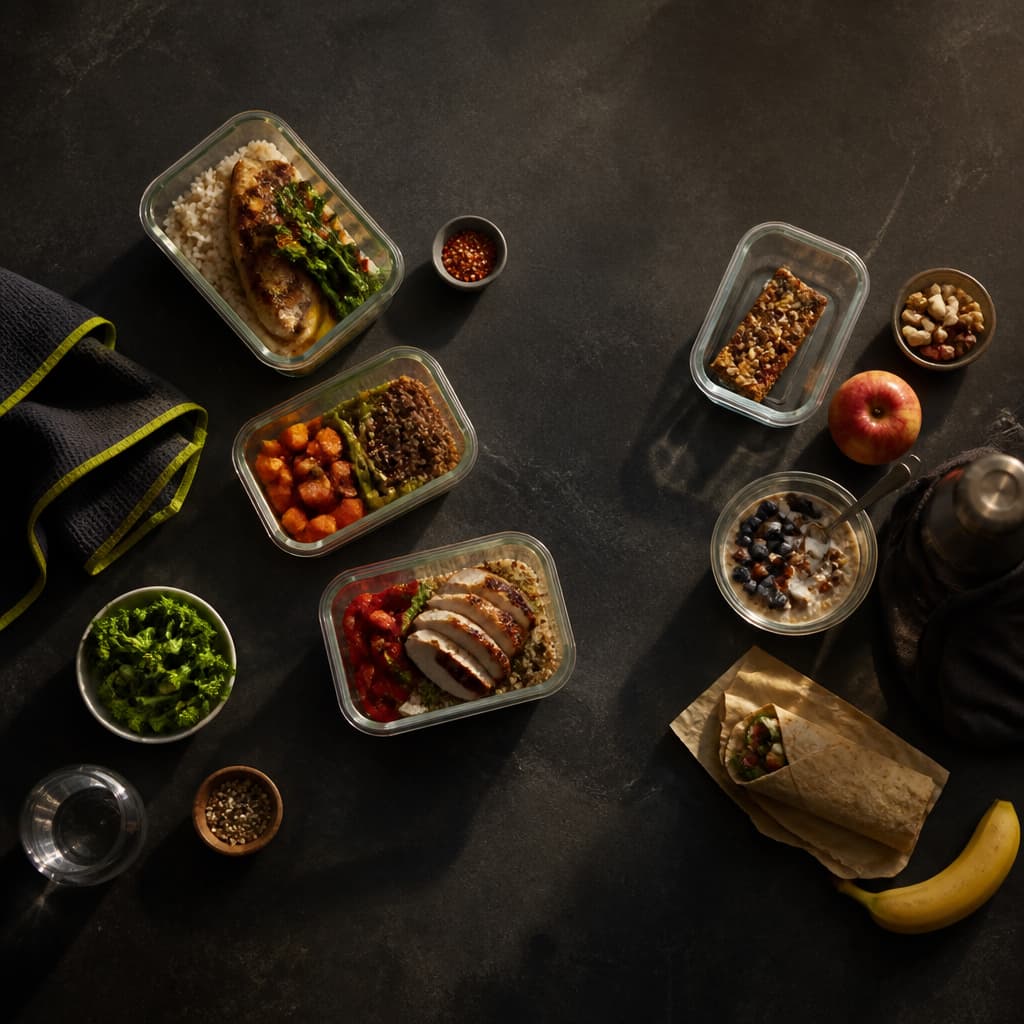
Protein grams matter, but adequacy is only the first test. A useful eating pattern must also work across meals, budgets, schedules, energy needs and ordinary life.

When athlete, coach and algorithm disagree, the answer is neither automatic obedience nor a reflexive veto. It is a governed decision that protects agency, respects safety and records the reasoning.

A practical, evidence-led guide to rebuilding a 60-minute resistance session in 20 minutes—without pretending the reduced dose equals the full plan.

AI can generate a workout in seconds. The harder task is deciding when an athlete should maintain, progress, reduce or reschedule—and explaining why.

A readiness score is useful only if it changes the workout. When sleep is short, soreness is up and time is tight, the right response may be to maintain, reduce, substitute, reschedule or hold — but only after context and confidence are checked together.