The bedroom that never switches off
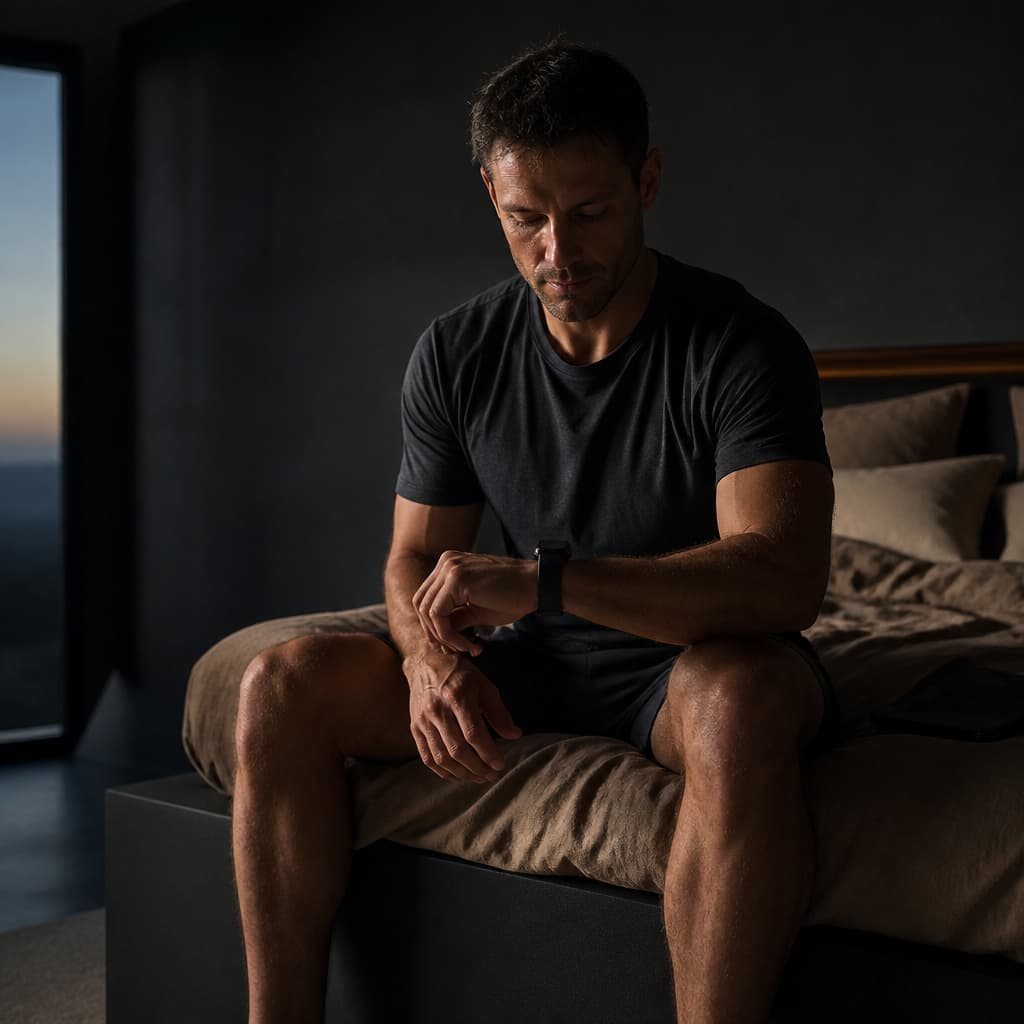
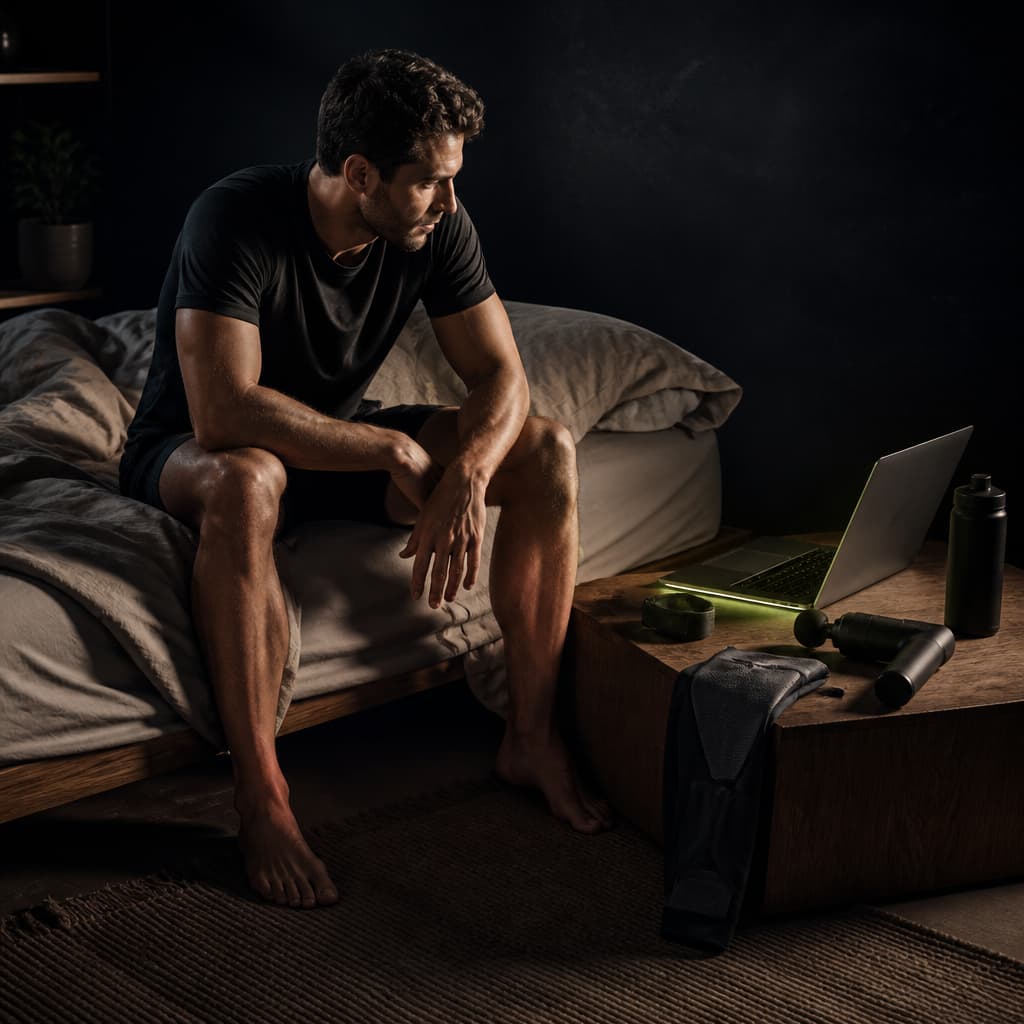
The more elaborate recovery looks, the easier it is to mistake activity for restoration. In a dark bedroom, a sleep ring charges beside a massage gun. Compression sleeves hang from a chair; a cold-plunge alarm waits on the phone. The room is organised around recovery, yet its owner is answering email past midnight. The ritual has become another performance, consuming the time and calm it was meant to restore.
Maya’s original plan is a demanding interval session on Tuesday morning. Then two short nights, a late work deadline and a missed dinner introduce new information. Her wearable score is low, but her legs feel ordinary and nothing suggests an immediate safety concern. The conflict is not simply train versus rest: one metric says stop, while the wider pattern suggests accumulated strain. She substitutes 30 minutes of easy aerobic work, eats adequately, protects an earlier bedtime and reassesses the next day. Recent sleep opportunity, nutrition and context matter more than one score. If unusual pain, marked dizziness or other concerning signs emerge, the session stops and appropriate professional advice takes priority.
A recovery ritual can become another demand wearing the clothes of rest.
Recovery is an outcome, not a display
Recovery is the restoration of capacity for the next relevant demand—not the number of interventions completed. The evidence hierarchy starts with sufficient sleep opportunity, adequate energy and appropriate carbohydrate and protein intake, sensible spacing of demanding sessions, and time. Athlete sleep consensus work treats sleep as foundational, while sleep and performance research indicates that sleep loss can impair sporting performance. Nutrition guidance is similarly direct: when demands are high or turnaround is short, adequate intake matters.
That does not make every intervention beyond the foundations useless. It puts each one in the correct tier. Sleep interventions may help some outcomes, but studies are often small or methodologically varied. Recovery research has the same limitation: protocols, participants and endpoints differ, and a better soreness rating is not automatically a better performance result. Before buying precision, establish whether the basics are merely unglamorous—or genuinely absent.

What problem are you solving?
A recovery decision should begin with a target. Is the problem insufficient sleep, inadequate food, soreness, a short interval before the next event, or simply a desire to unwind? If the answer is unclear, escalation is difficult to justify. First address any missing foundation. Then ask whether an optional tool improves the outcome that actually matters, whether the effect is large enough to notice, and what the tool displaces.
Massage may reduce perceived soreness and improve how recovery feels without reliably improving direct performance. Compression evidence is mixed, with little meaningful strength-recovery benefit overall in some analyses. Active recovery has weak support for restoring performance, although gentle movement may suit some people. Cold-water immersion can improve soreness and perceived recovery, and may assist some short-turnaround outcomes. It is not a universal default: frequent use after resistance training may work against longer-term strength or hypertrophy goals in some settings. Preference matters, and expectancy or context can shape perceived benefit. A pleasant ritual may therefore have value without requiring an exaggerated physiological story.
No defined problem is also a decision branch. When sleep opportunity, food intake, recent load, function and subjective experience remain stable, maintaining the original plan and recovery routine is the better decision. Adding an intervention without a clear reason introduces complexity rather than useful adaptation. An explainable recommendation should state what changed, which signals mattered, which were discounted and why maintaining, reducing or adding something was selected.
Define the need
- Sleep deficit
- Soreness
- Short turnaround
- Relaxation
Weigh evidence and context
- Goal
- Recent load
- Food and sleep
- Individual response
Account for uncertainty
- Signal quality
- Agreement
- Trend
- Missing information
Apply the safety gate
- Conservative action
- Human oversight
- Escalate when appropriate
Make the decision
- Maintain
- Simplify
- Add selectively
- Reassess
Give the explanation
- What changed
- What mattered
- What was discounted
- Why this option
A better soreness rating is not automatically a better performance result.
Decision confidence
High confidence exists when good-quality signals agree: repeated short nights, declining session quality and rising life stress support reducing or rescheduling load. Medium confidence may arise when a wearable sleep estimate worsens but self-report and recent training remain stable; weight the trend and context, discount one anomalous score, then reassess after the warm-up. Low confidence means missing data, uncertain device accuracy or conflict; choose a conservative, reversible step. Reject cancelling a week because one dashboard turns red. Maintaining the existing routine is justified when sleep opportunity, food intake, recent load, function and self-report are stable and no safety concern emerges. In readiness-based training, readiness signals are designed to be interpreted together with context, confidence and safety constraints. Flex Force X is designed to adapt training recommendations when relevant context justifies a change. The product philosophy favours clear explanations for recommendations and changes. Safety checks and appropriate human oversight are design constraints, not guarantees that all risk can be removed. Together, those principles connect information, evaluate it, apply safety rules, adapt the decision and explain the reasoning.
Decision cost runs both ways: more adds burden, less can lose benefit
Pushing extra interventions can add expense, anxiety and adherence burden. Reducing recovery to nothing can cause insufficient sleep or a lost benefit and missed opportunity. The appropriate decision accounts for both costs. The point is not to minimise recovery or maximise intervention; it is to spend limited time, attention and money where they are most useful.
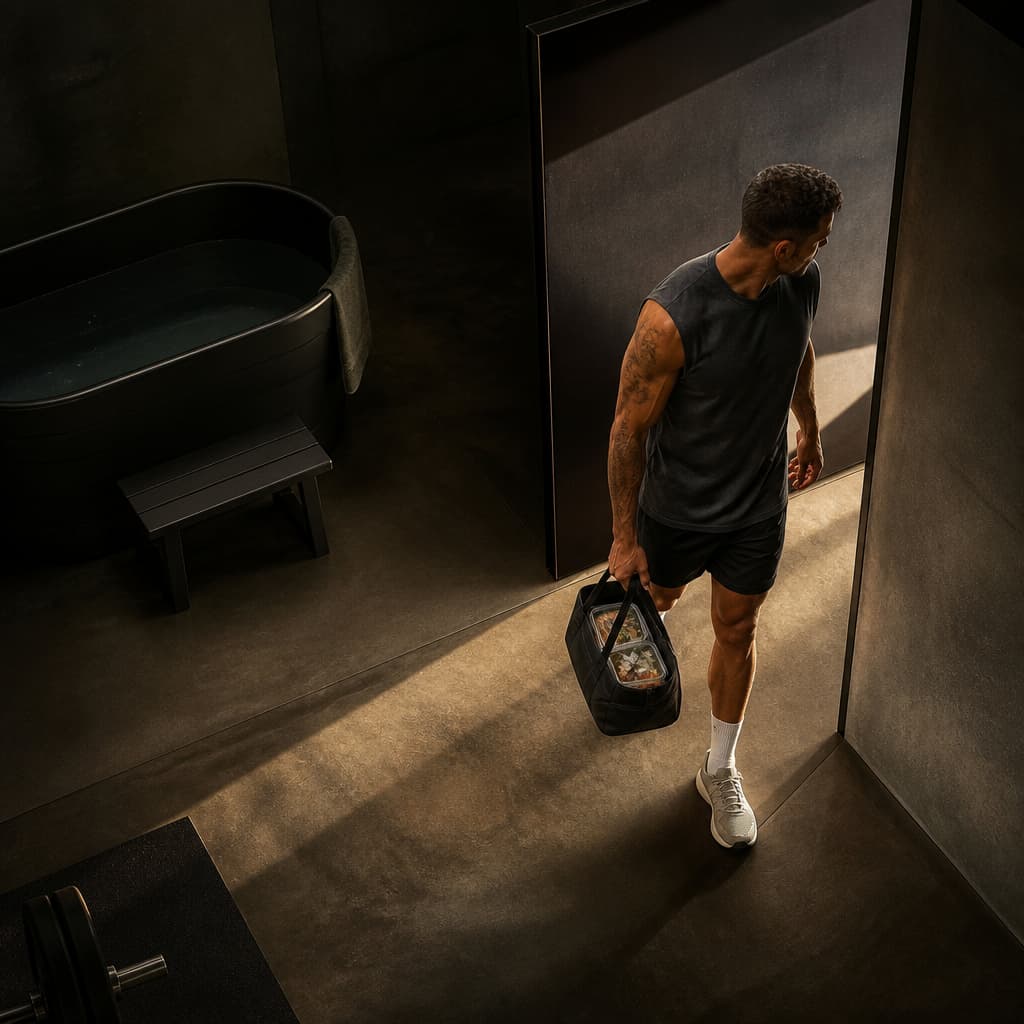
Liam, a recreational lifter, originally plans four strength sessions and cold-water immersion after each because he enjoys the sensation and sees a better morning score. New signals complicate the plan: gym performance is stable, his main goal is muscle gain, and the ritual delays dinner and bedtime. The conflict is subjective relief versus adaptation, time and adherence. He holds routine post-lifting immersion, keeps the strength plan and reserves cold exposure for an occasional short-turnaround event. The explanation is goal-specific, not anti-cold. If performance deteriorates, sleep remains poor or concerning physical responses occur, he reassesses and seeks qualified guidance where appropriate. The same restraint should shape adaptive workout plans: neither aggressive progression nor unnecessary reduction is cost-free.
The purpose is not to maximise intervention. It is to make the most appropriate decision.
Keep the pleasure. Audit the machinery.
Pleasure is not a trivial outcome. A massage, warm bath or quiet walk may create a useful boundary between work and rest. Expectancy and ritual can influence how people feel, and that experience can support adherence. Keep a preferred tool when it is affordable, safe, genuinely enjoyable and not displacing sleep, food or necessary downtime. A workout, nutrition and recovery app should help distinguish a valued ritual from an escalating obligation.
For seven days, simplify without becoming careless. Keep essential routines and any professionally advised measures, change one optional element at a time, and compare like with like. The audit is not a test of toughness. It is a way to determine whether each layer solves a real problem. If removing a tool makes no meaningful difference, leave it out. If it reliably improves a relevant outcome without imposing a larger cost, keep it for that purpose.
The closing provocation
The recovery market often sells visible effort because visible effort is easy to package. Bodies are less theatrical. They respond to repeated sleep opportunity, sufficient fuel, tolerable loading and time, with optional tools earning their place at the margins. Some rituals are useful. Some are enjoyable. Some are simply more work wearing the clothes of rest.
This is the position behind the Flex Force X system: information earns value by changing a decision—or by showing why the original decision should be maintained. Recovery is not the performance around the work; it is what makes the next appropriate decision possible. The most advanced recovery decision may be to stop performing recovery.
REFERENCES
Sources
- Neil P. Walsh et al.. Sleep and the athlete: narrative review and 2021 expert consensus recommendations. British Journal of Sports Medicine.View source
- Hugh H. K. Fullagar et al.. The Impact of Sleep Interventions on Athletic Performance: A Systematic Review.View source
- D. Travis Thomas, Kelly Anne Erdman, Louise M. Burke. Position of the Academy of Nutrition and Dietetics, Dietitians of Canada, and the American College of Sports Medicine: Nutrition and Athletic Performance. Journal of the Academy of Nutrition and Dietetics.View source
- Chad M. Kerksick et al.. International Society of Sports Nutrition position stand: nutrient timing. Journal of the International Society of Sports Nutrition.View source
- Michael Kellmann et al.. Recovery and Performance in Sport: Consensus Statement. International Journal of Sports Physiology and Performance.View source
- Bas Van Hooren, Jonathan M. Peake. Do Active Recovery Interventions Improve the Recovery of Physical Performance? A Systematic Review and Meta-Analysis. Sports Medicine.View source
- Hannah L. Davis, Sahar Alabed, Tim J. A. Chico. Effect of sports massage on performance and recovery: a systematic review and meta-analysis. BMJ Open Sport & Exercise Medicine.View source
- Olivier Dupuy et al.. An Evidence-Based Approach for Choosing Post-exercise Recovery Techniques to Reduce Markers of Muscle Damage, Soreness, Fatigue, and Inflammation: A Systematic Review With Meta-Analysis. Frontiers in Physiology.View source
- Christopher J. Beedie, Abigail J. Foad. The placebo effect in sports performance: a brief review. Sports Medicine.View source
HUMAN REVIEW
Reviewed by
- Peter WestonDesignated Legal ReviewerLegalDesignated by Flex Force X